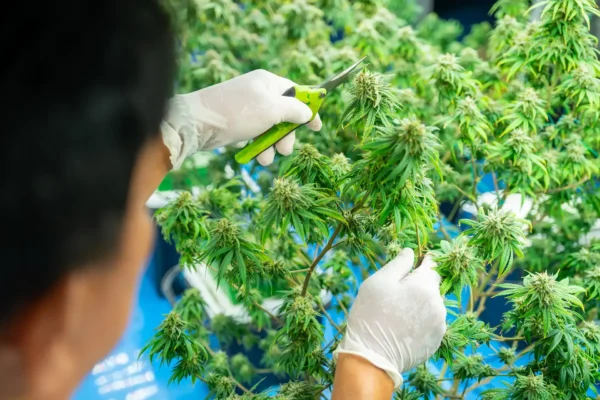

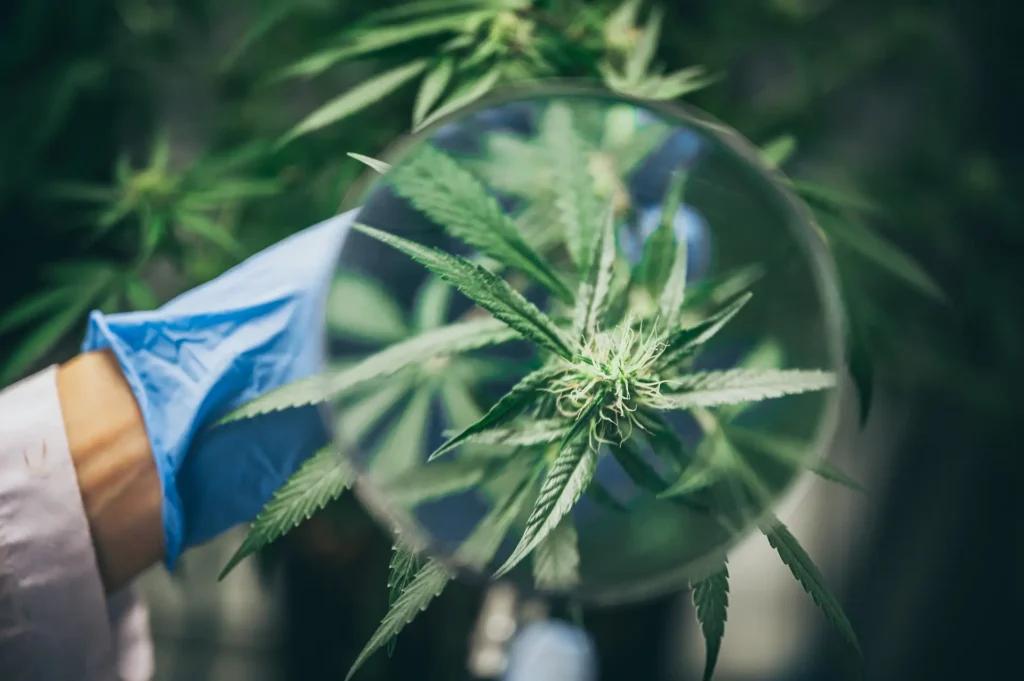
Cannabis is a distinctive flowering plant, most easily recognised by its serrated green leaves, tall stems, and dense, resin-coated flowers known as buds. Under closer inspection, the plant is covered in tiny crystal-like structures called trichomes, which give it a slightly frosted appearance.
Although cannabis comes in different varieties, all plants share these core features, along with roots, stems, leaves, and flowers that each play a role in the plant’s growth and composition.
In this article, we take a closer look at the anatomy of the cannabis plant, exploring how it’s different parts work together and what makes it unique.
At a Glance
- The cannabis plant is a flowering species believed to have originated in Asia. It is commonly grouped into three types: sativa, indica, and ruderalis, although many modern varieties are hybrids.
- Cannabis plants have several distinct parts, including roots, stems, leaves, flowers (buds), and trichomes. Their serrated green leaves, made up of multiple pointed leaflets, are one of the plant’s most recognisable features.
- Cannabis flower contains hundreds of naturally occurring compounds, including cannabinoids, terpenes, and flavonoids. These compounds contribute to the plant’s characteristics and potential effects. Trichomes are tiny, crystal-like structures on the flower that produce many of these compounds.
- Cannabis has been cultivated and used for thousands of years for a variety of purposes, including medicine, textiles, food, and religious or spiritual practices.
What is Cannabis?
Cannabis is a flowering plant species that has been cultivated for thousands of years. It is classified as belonging to the Cannabaceae family and is believed to have originated in Asia. Today, it is grown in a variety of climates around the world. Cannabis is commonly grouped into three types: Cannabis sativa, Cannabis indica, and Cannabis ruderalis. However, many modern cannabis varieties are hybrids, combining characteristics of more than one type.
Sometimes referred to as weed or marijuana, cannabis contains hundreds of naturally occurring compounds, including cannabinoids, terpenes, and flavonoids. Together, these compounds contribute to the plant’s aroma, flavour, and biological properties, which is why different varieties of cannabis, often referred to as strains, can vary significantly. Tiny glandular structures called trichomes produce and store many of these compounds, particularly cannabinoids and terpenes.
Today, cannabis use and its legal status vary depending on where you are in the world. In the UK, medical cannabis may be legally prescribed for eligible patients in certain circumstances. Throughout history, cannabis has been used for a variety of purposes, including:
- Medicine: Ancient cultures used cannabis for pain, nausea, and inflammation. Today, medical cannabis is prescribed in many countries for symptoms associated with a range of health conditions, while research into its potential uses continues.
- Textiles: Hemp, a fibrous variety of cannabis, has been used for centuries to produce rope, fabric, paper and other materials.
- Food: Hemp seeds have been used as a food source for thousands of years. Today, they are valued for their nutritional content and are commonly eaten whole or hulled, ground into flour, or pressed to produce oil. [1].
- Religious and spiritual practices: Throughout history, cannabis has been used in ceremonies and rituals across different cultures for religious and spiritual purposes.
The Anatomy of a Cannabis Plant
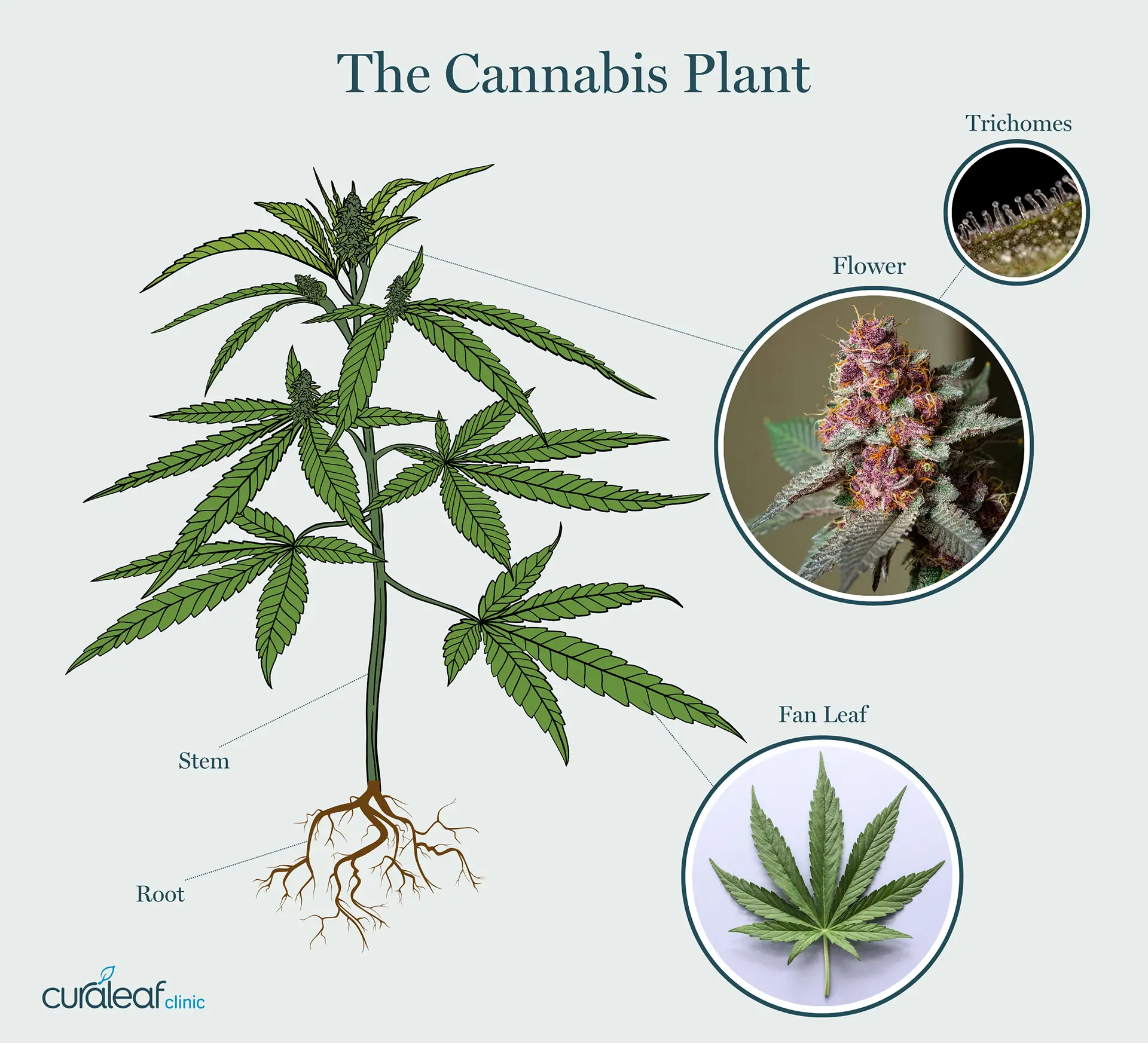
The cannabis plant has a distinctive appearance that makes it easy to recognise, but there’s more to it than its iconic leaves and flowers. Each part of the plant plays a role in its growth and the production of the naturally occurring compounds that make cannabis unique. Depending on the variety and growing conditions, cannabis plants can grow up to around three metres tall.
Cannabis Leaves
The serrated, fan-like leaves of cannabis are one of its most recognisable features. While they contain relatively low concentrations of cannabinoids compared with the flowers, they mainly contribute to photosynthesis and the plant’s overall chemistry.
Cannabis leaves also contain compounds known as flavonoids, which can influence their colour and help protect the plant from environmental stress and damage.
Cannabis Flowers
Cannabis flowers, also known as buds, contain the highest concentration of cannabinoids and terpenes in the plant.
These compounds are produced in trichomes—tiny, crystal-like structures that cover the surface of the flower.
The abundance of these trichomes contributes to the plant’s aroma, potency, and potential effects.
Cannabis Stems and Roots
Cannabis stems provide the plant with structure and support for growth. While they contain only minimal amounts of cannabinoids, the fibrous stems of hemp have been used for centuries to produce textiles, rope, and paper.
The roots anchor the plant in the soil and absorb water and nutrients needed for growth. Although cannabis roots have been studied for their chemical composition and historical medicinal use, they are not used in prescribed cannabis-based medicinal products.
What Compounds are in Cannabis?
Cannabis is rich in naturally occurring compounds, each with distinct properties. Some interact with the human body when consumed, while others contribute to the plant’s aroma and flavour. Together, these compounds help shape the overall characteristics and effects of cannabis.
Cannabinoids
Cannabinoids are chemical compounds which interact with the body’s endocannabinoid system. Over 140 cannabinoids have been identified in the cannabis plant, with the two most widely studied being cannabidiol (CBD) and tetrahydrocannabinol (THC).
Cannabinoids can be categorised into three main types, based on where they originate:
- Phytocannabinoids: Naturally found in the cannabis plant, these compounds interact with cannabinoid receptors in the body and influence a range of physiological processes.
- Endocannabinoids: Naturally produced by the human body, these compounds help regulate a range of bodily functions and maintain the body’s internal balance.
- Synthetic cannabinoids: Man-made compounds created in laboratories, often used in medical research and pharmaceutical development.
How do Cannabinoids Interact with the Body?
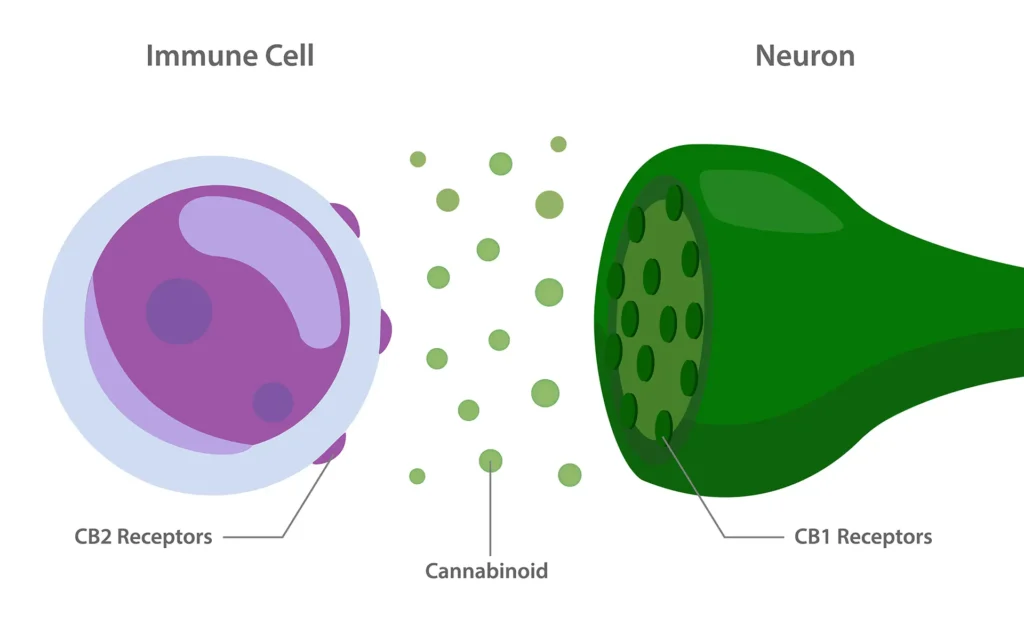
Cannabinoids interact with the body’s endocannabinoid system, which plays a role in regulating functions such as mood, pain, appetite, and immune response. They primarily interact with two cannabinoid receptors:
- CB1 receptors: Found mainly in the brain and central nervous system, these receptors are involved in functions such as mood, memory, and coordination.
- CB2 receptors: Located primarily in the immune system, these receptors are associated with the regulation of inflammation and pain.
Through these interactions, cannabinoids may influence pain perception, mood, appetite, and other physiological processes.
Terpenes
Terpenes are aromatic compounds found in cannabis and many other plants. These serve as a natural defence against pests. Terpenes are responsible for the cannabis plant’s distinctive aroma and also play a role in how cannabinoids may interact with the body. Some common terpenes in cannabis include pinene, humulene, limonene, linalool, and myrcene.
Flavonoids
Flavonoids are plant compounds responsible for pigmentation, scent, and flavour. Cannabis contains around 20 unique flavonoids.
Flavonoids have been studied for their potential antioxidant properties, although their specific effects in cannabis are still being researched. At present, there is limited evidence to suggest direct medical benefits from flavonoids in cannabis.
Trichomes
Trichomes are the tiny, glandular structures that coat the surface of cannabis flowers. These resinous glands produce and store cannabinoids, terpenes, and flavonoids.
Trichomes appear as a sticky, frost-like layer on the buds, and their density often determines the potency of the plant. They act as the plant’s natural defence mechanism to deter herbivores and protect the plant from harsh environmental conditions.
What are the Different Types of Cannabis Plants?
Cannabis plants are commonly described as indica, sativa, or ruderalis. While many modern cannabis varieties are hybrids, these categories are still widely used to describe the broad characteristics of cannabis plants.
- Indica plants typically have broader, darker leaves and a shorter, bushier growth habit. They have traditionally been associated with relaxing or calming effects.
- Sativa plants are characterised by their taller growth and longer, narrower leaves. They have traditionally been associated with more uplifting or stimulating effects.
- Ruderalis is a hardier type of cannabis that is well adapted to cooler climates and shorter growing seasons. It is typically smaller than indica and sativa plants and is known for flowering automatically based on age rather than changes in light exposure.
While these categories are useful for broadly describing cannabis plants, many experts now also consider a plant’s cannabinoid and terpene profile, particularly in a medical context. To find out more, check out our guide explaining how we understand cannabis through terpene profiles.
What is Hemp?
Hemp is a variety of the cannabis plant which typically contains very low levels of THC. Hemp is predominantly used for industrial purposes, including the production of fibre, textiles, paper, food products and building materials.
In the UK, approved hemp varieties may be grown under an Industrial Hemp License. However, this licence only permits the use of the seeds and mature stalk (fibre), not the flowers or leaves.
How is Hemp Different from Other Cannabis Plants?
Unlike many other cannabis varieties, hemp has been selectively bred for characteristics such as strong fibres, seed production, and very low levels of THC. These characteristics make it well suited to industrial uses.
Conclusion
Cannabis is a complex plant with a rich chemical profile. Its cannabinoids, terpenes, and flavonoids work together to create its unique effects; while its flowers, leaves, and roots contribute to its overall function and resilience.
At Curaleaf Clinic, we help patients understand medical cannabis and how it may fit into their treatment journey. If you’d like to learn more, our team of specialists are here to provide evidence-based guidance and support.
Check your eligibility for a consultation with Curaleaf Clinic by completing our free eligibility form today.
References
[1] Rizzo, G., Maximilian Andreas Storz and Gioacchino Calapai (2023). The Role of Hemp (Cannabis sativa L.) as a Functional Food in Vegetarian Nutrition. Foods, [online] 12(18), pp.3505–3505. doi:https://doi.org/10.3390/foods12183505.