

Medical cannabis has been legal to prescribe in Australia for almost a decade, and more than a million prescriptions have since been approved. Yet we still know relatively little about what treatment is actually like for patients over the long term, once the novelty has passed and the medicine has become part of everyday life.
A new qualitative study, published in the Australian Journal of Primary Health, set out to answer exactly that. Researchers interviewed 15 people who had been prescribed medical cannabis for at least a year, and in most cases much longer, to understand their experiences of getting a prescription, using the medicine, and living with it day to day.
Key Takeaways:
- The study. Researchers at the University of Sydney interviewed 15 Australians who had been prescribed medical cannabis oil for a chronic health condition for one to four years, and analysed what they said about their experiences.
- What patients described. Participants talked about the burden of their conditions, why they sought an alternative, the effort of managing their own dose, worries about the law, and improvements they felt they had seen.
- Barriers were a recurring theme. Many described difficulty finding a doctor willing to prescribe, complicated approval processes, high costs, and anxiety about driving laws.
- This is not proof of benefit. Everyone interviewed had chosen to stay on treatment, which is one reason positive accounts were expected. A small, self-selected group of interviews cannot show that medical cannabis caused any of the changes described.
- What it means. The study offers a valuable window into patients’ lived experience and the barriers they face. It does not establish that medical cannabis is effective or safe for any given person, and better-designed trials are still needed.
What is medical cannabis?
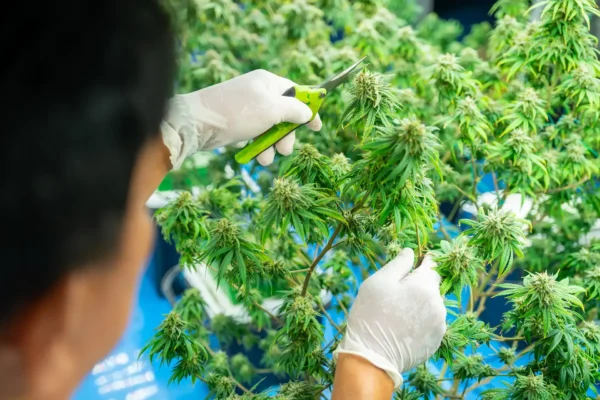
Medical cannabis, also called a cannabis-based medicinal product (CBMP), is a prescribed medicine made from the cannabis plant or its active compounds. The two best known compounds are cannabidiol (CBD) and tetrahydrocannabinol (THC). Products contain these in different ratios.
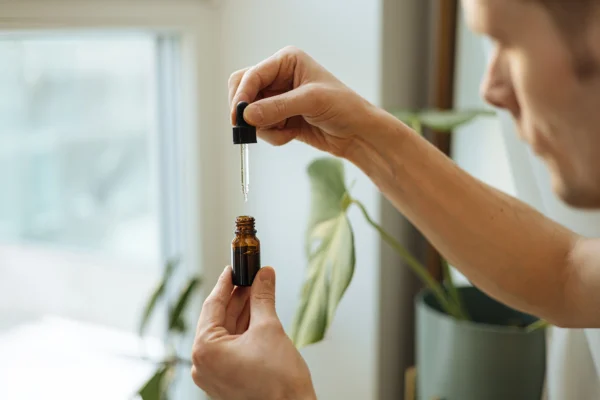
In the study, patients were prescribed cannabis oil taken by mouth, in a range of CBD-to-THC strengths, from a single manufacturer. In the UK, prescribed products can also include other formulations, such as dried flower or cartridges for vaporisation, and pastilles for ingestion.
How does medical cannabis access work in Australia?
Medical cannabis was legalised in Australia in 2016. Most products are not listed on the Australian Register of Therapeutic Goods (ARTG), which means they are unapproved medicines. To date, only two cannabis-based products are registered on the ARTG: Epidyolex, for some severe forms of epilepsy, and Sativex (nabiximols), for muscle stiffness (spasticity) in multiple sclerosis.
Because most products are unapproved, a doctor has to either become an Authorised Prescriber or apply through the Special Access Scheme (Category B) to prescribe them. Patients may be able to access these medicines when conventional treatments have not worked well enough. Since 2016, more than one million prescriptions have been approved across more than 200 health conditions, most commonly pain, anxiety, depression and sleep problems.
Why did researchers study patients’ long-term experiences?
Larger studies have already collected data on how patients report feeling after starting medical cannabis. Observational research in Australia has found that patients often report improvements in quality of life, pain, mood and sleep, and some report using fewer opioids and other prescription medicines. Those findings come with important caveats, because observational studies cannot prove cause and effect.
Numbers, though, only tell part of the story. The researchers wanted to understand the experience behind the questionnaires: why people turn to medical cannabis, what gets in their way, and how treatment fits into their lives over months and years. Qualitative interviews are well suited to that kind of question.
What did the study look at?
The researchers interviewed a small group of patients drawn from a larger survey called the Quality-of-Life Evaluation Study (QUEST). QUEST followed 2,353 patients across Australia who were prescribed cannabis oil between December 2020 and March 2023, tracking their patient-reported outcomes over 12 months.
For this new study, the team selected a subsample of QUEST participants chosen to reflect a range of conditions, ages, genders, locations and employment situations. Between August 2023 and August 2024, they carried out semi-structured interviews by video call or telephone. Each interview lasted around 26 minutes on average. Participants were asked open questions about:
- How their chronic condition and previous treatments had affected daily life.
- Why they first sought medical cannabis.
- Any hopes or worries they had about trying it.
- Their experiences with prescribing doctors.
- How they rated medical cannabis as a treatment.
- What, if anything, had changed in their lives since starting it.
The interviews were analysed using thematic analysis, a recognised method for identifying patterns across what people say. Reporting followed the COREQ standard for qualitative research.
Who took part?
Fifteen people took part, nine women and six men, aged between 33 and 78 years. They had been taking prescribed medical cannabis oil for between one and four years. At the time of the interviews, 13 of the 15 were still taking it. One had stopped because of an unrelated health condition, and one had paused after moving interstate.
Their conditions included several types of chronic pain, insomnia, generalised anxiety, mixed depression and anxiety, and multiple sclerosis-related pain and spasticity. The products they used ranged from CBD-only oils through to THC-dominant oils.
What did patients say?
The researchers grouped what participants told them into four themes, named using the patients’ own words.
‘This isn’t living’
Participants described how much their long-term conditions had worn them down, affecting sleep, mood, work and relationships. All of them said managing their condition was the main reason they had sought medical cannabis.
Every participant had already tried conventional treatments, including strong painkillers such as opioids and medicines such as benzodiazepines. Some found the side effects hard to live with. Others worried about building tolerance or becoming dependent. As one man in his 60s with musculoskeletal pain and insomnia put it, he “really was struggling with opioid stuff”, both with the effect on his thinking and with the idea of having to keep taking it.
‘I was looking for a solution’
This search for an alternative led people towards medical cannabis. For many, the first information came from internet searches and online discussion groups, and several began looking into it after hearing about the QUEST study.
People’s reasons for being willing to try it varied. Some could no longer access other medicines, some wanted to avoid side effects, and some believed that, as a “natural” product, it would suit them. It is worth noting that “natural” does not mean risk-free, and any medicine, including cannabis-based ones, can cause side effects.
Access was a common frustration. Many participants described doctors who were unwilling to prescribe, sometimes because they were unfamiliar with the products and sometimes because of the paperwork involved. One man in his 50s said his own GP “was adamant that they didn’t want to get involved in it”, so he had to seek out a different doctor. Others pointed to the cost of the products and the short shelf life of the oils, which meant some was wasted.
‘It wasn’t to get high’
Once they had a prescription, participants described a lack of clear guidance on how to use the medicine well. Many felt they were left to work out their own dose by trial and error, balancing benefit against the risk of feeling intoxicated. Some chose to take it only at night for this reason. Others reported side effects such as increased appetite, which they generally found manageable, and a few felt they needed more over time and took breaks to counter this.
The law was a significant worry. Non-medical cannabis is illegal across most of Australia, and roadside drug testing does not distinguish medical use from recreational use. Several participants were anxious about being stopped by police, losing their driving licence, or facing consequences at work. As one woman in her 40s explained, she was “petrified of being pulled over by the police”, not wanting to break the law or risk her job. Some limited themselves to CBD-only products because of these fears.
‘Everything’s much better’
The final theme covered the improvements participants described, including better sleep, less pain, improved mood, and in some cases being able to reduce or stop other medicines they had relied on. Some said treatment had let them focus on other parts of their lives, from their general health to their relationships.
These are important accounts, but they need to be read with care. As the authors themselves point out, everyone interviewed had stayed in the QUEST study for a year and most had chosen to continue treatment afterwards, so positive reports were expected. Not everyone felt the full benefit they had hoped for. Because this was a small group who had all opted to keep taking the medicine, these experiences cannot tell us how a wider group of patients would fare, and they cannot show that the medicine itself caused the changes.
Were there any limitations?
The authors are clear about what a study like this can and cannot show. The main points to keep in mind are:
- A small, self-selected group. Only 15 people were interviewed, all of whom had chosen to take part and had continued treatment. People who stopped medical cannabis, or who found it did not help, are not represented.
- Access was easier than usual. Everyone had first obtained medical cannabis while taking part in a clinical study, which is likely to understate the barriers most patients face.
- One product type, one manufacturer. All participants used cannabis oil from the same manufacturer, so the findings may not apply to other products.
- Perceived benefit was built in. Participants had to have renewed their prescription recently to be included, meaning they had already felt enough benefit to keep going. Reported benefits are likely to be less pronounced in the general patient population.
- Experiences, not measurements. Interviews capture what people feel and remember. They cannot measure whether a medicine works, and they cannot separate its effects from other changes in someone’s life.
What are the implications of these insights?
To the knowledge of the authors, this is the first study to explore the experiences of patients prescribed medical cannabis in Australia since the national legalisation of medical cannabis in 2016.
Varied reports on patient experiences: The study offers valuable insights into patients’ experiences with medical cannabis, including their reasons for taking medical cannabis, perceived barriers to access, and the impact of medical cannabis treatment on their conditions and other areas of life.
Participants reported pros and cons of medical cannabis treatment: The participants noted positive effects of medical cannabis, including improving their symptoms and allowing them to reduce or even stop their use of other medications. However, participants also described minor side effects and dose-management challenges.
Barriers to treatment remain: The experiences reported by patients highlighted the persistence of barriers in medical cannabis treatment in Australia, including a lack of awareness about medical cannabis among clinicians, complex prescription processes, and the high cost of products.
Frequently Asked Questions
What is medical cannabis?
Medical cannabis, or a cannabis-based medicinal product, is a prescribed medicine derived from the cannabis plant. It usually contains cannabidiol (CBD), tetrahydrocannabinol (THC), or a combination of the two, in varying strengths. It is prescribed by a specialist doctor, not bought over the counter.
What conditions can medical cannabis be prescribed for in the UK?
Since a change in the law in 2018, specialist doctors on the General Medical Council’s Specialist Register have been able to prescribe cannabis-based medicines in certain circumstances, usually when licensed treatments have not helped enough or are not tolerated. The most common conditions for which medical cannabis is prescribed include:
Is medical cannabis legal in the UK?
Yes. Cannabis-based medicines have been legal to prescribe in the UK since November 2018, but only by a specialist doctor and only in specific circumstances. They remain unlicensed for most conditions, which means they have not gone through the full approval process that licensed medicines have.
What did patients in this study say were the main barriers?
The most common barriers described were difficulty finding a doctor willing to prescribe, complicated approval processes, the high cost of products, and worry about driving laws and the possibility of legal trouble.
Does this study prove medical cannabis works?
No. It is a small qualitative study of 15 people who had all chosen to continue treatment. It captures their experiences, which is valuable, but it cannot prove that medical cannabis caused the improvements they described, and it cannot tell us how other patients would respond. Higher-quality trials are needed for that.
Thinking about your treatment options?
In the UK, cannabis-based medicines are prescription-only and remain unlicensed for most conditions. They are considered only by a specialist doctor, after a full assessment, and usually only when licensed treatments have not provided enough relief.
If you would like to understand whether a specialist consultation may be appropriate for you, you can complete Curaleaf Clinic’s eligibility check. Any decision about treatment is made by a specialist doctor on an individual basis.