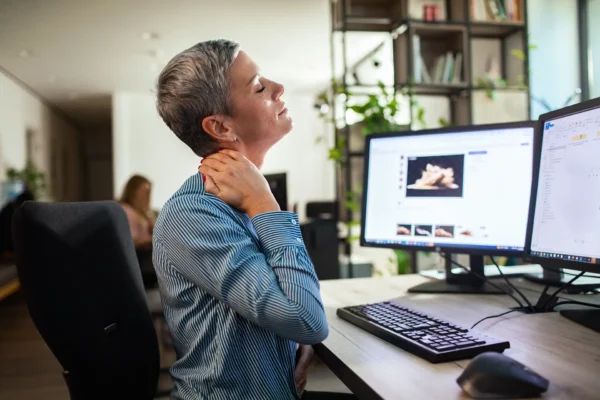


Neck and low back pain are among the most common reasons for visiting a GP or physiotherapist in the United Kingdom and across Europe. According to the Global Burden of Disease study, low back pain is the single leading cause of years lived with disability worldwide, out of 354 conditions studied. Neck pain ranks as the eighth-highest cause in women and twelfth-highest in men.
With these conditions placing a significant burden on individuals, healthcare providers, and wider society, identifying and promoting effective, evidence-based treatments is essential.
A systematic review published in the European Journal of Pain by Corp and colleagues examined 17 European clinical practice guidelines to identify which treatments are consistently recommended for neck and low back pain across the continent. This blog post summarises their key findings in plain language.
What did this review examine?
The researchers, part of the Back-UP programme (a European research project developing digital health tools), searched eight electronic databases and five sources of grey literature for clinical guidelines published between January 2013 and May 2020. They were looking for evidence-based guidelines issued by professional bodies across Europe that provided treatment recommendations for adults with neck or low back pain.
The review focused specifically on treatments that could be delivered within primary care, or through referral pathways from primary to secondary care, and that aimed to reduce pain, improve function, or support return to work. Guidelines focused solely on surgical options, severe trauma, or paediatric patients were excluded.
How was the quality of the guidelines assessed?
Each guideline was assessed using the AGREE II checklist, an internationally recognised tool for evaluating the quality of clinical practice guidelines. This checklist examines six key areas: the scope and purpose of the guideline, stakeholder involvement, how rigorously it was developed, clarity of presentation, whether it can be applied in practice, and editorial independence.
The researchers then devised a clear system to summarise and compare recommendations across all the guidelines. Recommendations were classified as strong, moderate, or weak depending on how consistently they appeared in high-quality and low-quality guidelines.
What were the main findings?
In total, 17 clinical practice guidelines were included from eight European countries: Belgium, Denmark, France, Germany, Italy, the Netherlands, Poland, and the United Kingdom. Twelve of these addressed low back pain, six concerned neck pain, and one covered both. Seven guidelines (41%) were considered high quality overall.
What treatments are recommended for neck pain?
Six guidelines provided treatment recommendations for neck pain, covering a wide range of options. High-quality guidelines consistently recommended the following:
- Reassurance — helping patients understand their condition is manageable
- Advice and education, including encouragement to remain active and exercise
- Manual therapy combined with other treatments such as exercise
- Referral for exercise therapy or a structured exercise programme
- Medications, including oral painkillers and topical treatments
- Psychological therapies or multidisciplinary treatment for patients with mood problems, psychosocial risk factors, or persistent pain
While the guidelines included recommendations for painkillers such as paracetamol, non-steroidal anti-inflammatory drugs (NSAIDs), and short-term opioid use for acute neck pain, these were based on weak evidence. This means the recommendations came from expert opinion or lower-quality guidelines, rather than strong clinical trials.
What treatments are recommended for low back pain?
Twelve guidelines provided treatment recommendations for low back pain, supported by a larger body of evidence than for neck pain. Notably, the guidelines for low back pain recommended primarily non-pharmacological treatments (treatments that do not involve medication). These included:
- Reassurance, advice, and education (with strong evidence)
- Encouragement to remain physically active
- Exercise programmes and physical therapy
- Manual therapy combined with active treatment
- Psychological therapies, including cognitive behavioural therapy (CBT), for patients with psychosocial risk factors or persistent pain
- Multidisciplinary rehabilitation programmes
- Work-based interventions and return-to-work programmes
- Surgical intervention for specific subgroups only (e.g. cauda equina syndrome or severe neurological symptoms)
The guidelines also included strong recommendations against several interventions for low back pain, including prolonged bed rest, routine imaging without red flag symptoms, traction, electrotherapy, orthotics such as belts and corsets, and spinal injections for non-specific low back pain.
How do the recommendations for neck and low back pain compare?
Despite the larger body of evidence available for low back pain, the review found that treatment recommendations were generally consistent across both conditions. Both sets of guidelines supported the use of advice and education, reassurance, exercise, manual therapy combined with active treatment, and psychological therapies for appropriate patient subgroups.
There were some notable differences. For neck pain, certain oral painkillers were recommended (albeit with weak evidence), whereas for low back pain, guidelines recommended primarily non-pharmacological approaches. Low back pain guidelines also included work-based interventions and return-to-work programmes, which were less prominent in the neck pain guidance.
This emphasis on non-pharmacological treatments for low back pain aligns with recommendations from The Lancet’s major back pain series, which called for greater use of non-drug approaches.
What are the limitations of this review?
As with any research, this review had several limitations that are important to consider:
- Geographic coverage: The guidelines included came mainly from northern and western European countries. Clinical practice may differ in regions not represented in the review.
- Quality variation: Only seven of the 17 guidelines (41%) were considered high quality overall. Limitations were most common in how rigorously guidelines were developed and how easily they could be applied in practice.
- Translation challenges: For non-English guidelines, it was not always possible to have independent data extraction and quality appraisal by a second reviewer.
- Limited detail on delivery: Most guidelines lacked specific detail about the dose, duration, and delivery of recommended treatments — for example, which types of exercise or what components of patient education are most helpful.
What does this mean for patients living with neck or low back pain?
This review provides a helpful summary of the treatment approaches that have the broadest support from clinical guidelines across Europe. For patients, the key takeaway is that evidence-based care for neck and low back pain tends to focus on non-pharmacological approaches. This includes staying active, structured exercise, manual therapy alongside movement, and psychological support where needed.
Medication may play a role for some patients, particularly those with acute neck pain, but the evidence supporting its use is generally weaker than the evidence for active, non-drug approaches. For patients with persistent or complex pain, referral for psychological therapy or multidisciplinary rehabilitation may be recommended.
If you are living with ongoing neck or low back pain, speaking with your GP or another healthcare professional is an important first step. They can help identify which combination of treatments may be most appropriate for your individual circumstances.
Could medical cannabis be considered for chronic neck or low back pain?
For some patients, standard treatments for chronic pain may not provide adequate relief. In the UK, medical cannabis may be prescribed for chronic pain conditions when conventional licensed treatments have been tried without sufficient benefit.
Clinical evidence for the use of medical cannabis in chronic pain is still developing, and it is not a treatment that is appropriate for everyone. As with any prescription medicine, it should only be considered under the guidance of a specialist clinician who can assess whether it may be suitable based on your individual medical history and treatment journey.
How can Curaleaf Clinic help?
At Curaleaf Clinic, our experienced specialist clinicians can help you understand whether medical cannabis could be an option as part of your pain management plan. If you have been living with chronic neck or low back pain and have not found adequate relief from conventional treatments, you may wish to explore whether you could be eligible for a consultation.
To find out more, complete our eligibility assessment today.