

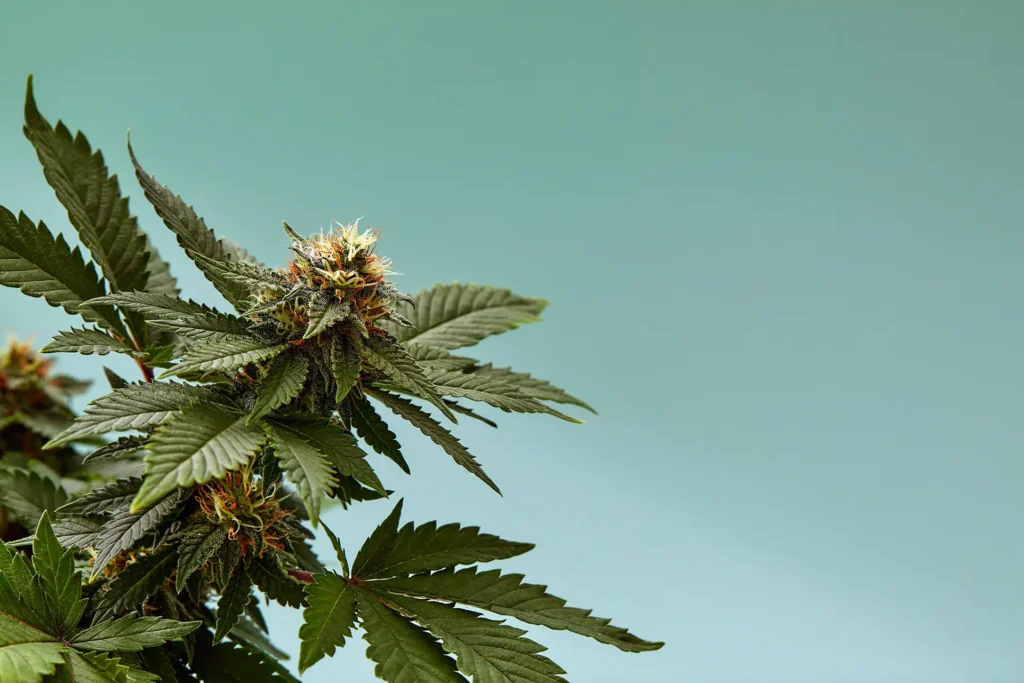
When individuals are seeking advice around medical cannabis, we often hear several misconceptions. One of the topics that comes up is tetrahydrocannabinol (THC) — the cannabinoid best known for its psychoactive effects and often the focus of public debate and misunderstanding.
So, what exactly is THC? And what role can THC play in prescribed medical cannabis for certain chronic conditions?
In this article, we’ll break down what THC is, how it affects the human body, and what its potential role could be in medical treatment — so you have the information you need to make confident, informed choices about your care.
What is THC?
THC stands for tetrahydrocannabinol and is one of more than 144 naturally occurring compounds, known as cannabinoids, found in the cannabis plant.
It is the compound most closely associated with the psychoactive effects of cannabis, sometimes described as a “high” or a feeling of euphoria when consumed in sufficient quantities. These effects are more commonly linked to recreational use than to prescribed medical cannabis, where they would be considered an adverse event rather than a desired outcome.
THC binds mainly to cannabinoid type 1 (CB1) receptors in the body’s endocannabinoid system (ECS). By interacting with these receptors, it may influence signalling in the brain and nervous system, which in turn may affect functions such as sleep, appetite, memory, mood and cognition. These effects can vary significantly between individuals, depending on factors such as dose, frequency of use and personal biology.
THC has been the focus of research and clinical interest for many years. Under medical supervision, it may be prescribed for certain chronic physical or mental health conditions. Research is ongoing, including through the UK Medical Cannabis Registry, which is helping to strengthen the available evidence on medical cannabis treatment, including medicines which contain THC.
Is THC legal in the UK?
Cannabis containing THC is classified as a Class B controlled drug in the UK, which means it is illegal to possess or supply unless it has been prescribed to you.
Since 2018, medical cannabis (or cannabis-based medical products (CBMPs)) containing THC have been legal to prescribe. The national guidance suggests medical cannabis should be reserved for patients when other treatments have not been effective. Only doctors on the General Medical Council’s specialist register may initiate a patient on CBMPs, typically through private clinics such as Curaleaf.
While medical cannabis in the UK is legal, access on the NHS is still very limited and generally restricted to a small number of conditions.
For more information on NHS access in the UK, read our latest research detailing the importance of expanded NHS access for patients.
How is THC Used in Medical Cannabis?
THC is one of the cannabinoids that may be included in prescribed medical cannabis, depending on a patient’s condition and clinical need, but it will not be suitable for everyone. When used, it works by interacting with the body’s endocannabinoid system, which plays a role in functions such as mood, sleep, appetite and pain signalling.
THC is just one of more than 144 naturally occurring cannabinoids found in the cannabis plant. The other most well-known cannabinoid is cannabidiol (CBD), but there are many others. This includes minor cannabinoids such as cannabigerol (CBG) and cannabichromene (CBC), which are also being studied to better understand the plant and its potential medicinal use. THC and
CBD are often compared, and you can read our THC and CBD guide to learn more about the differences between them.
Some research suggests that cannabinoids and other compounds found in the plant, such as terpenes of flavonoids, may influence one another when combined, creating different effects. Within the medical cannabis literature this concept is commonly described as the “entourage effect.” It is an area of ongoing study for researchers.
At Curaleaf Clinic, we recognise that every patient responds differently. Our specialists take time to understand the plant and its compounds, working closely with patients to find the treatment approach that is most appropriate for their individual needs.
What Medical Cannabis Products Contain THC?
At present, the only licensed medical cannabis product containing plant-derived THC is Sativex. This may be prescribed for individuals with multiple sclerosis-associated spasticity. There is also a licenced medication called dronabinol for the treatment of chemotherapy-induced nausea and vomiting. This contains a man-made version of THC.
However, unlicensed medical cannabis products containing THC can also be considered by doctors on the General Medical Council’s specialist register. They can consider it for individuals with chronic conditions whose symptoms have not respond to first-line treatments.
These products can vary in their composition:
- Isolate contains a single cannabinoid, such as THC or CBD.
- Broad-spectrum may include THC, but the exact balance of cannabinoids depends on the cannabis cultivar and how the product is processed.
- Full-spectrum retains the widest range of cannabinoids, terpenes and flavonoids naturally present in the plant, including THC.
Medical cannabis containing THC can also be prescribed in different formats, depending on clinical need, including:
- Capsules and pastilles
- Dried flower for vaporisation
- Medical cannabis oils
- Medical liquid vapes or inhalation cartridges
At Curaleaf Clinic, the type of product, its format, and its dose are tailored to each patient’s clinical needs. We work closely with each eligible patient to discover what works best for them.
How is THC measured in medical cannabis prescriptions?
In the UK, the THC content of medical cannabis products is measured differently depending on the prescribed format:
- Oils will list content in mg/ml — milligrams of THC per millilitre of oil. For example, an oil labelled “10 mg/ml” contains 10 milligrams of THC in each millilitre.
- Dried cannabis flowers show THC content as a percentage of the product’s weight. For example, a flower labelled “20% THC” means 20% of its weight is THC or there are 200 milligrams of THC per gram of dried flower weight.
These figures don’t directly equal the dose a patient consumes. Actual intake depends on how the product is administered and how often it is taken. Because this can vary from person to person, it’s important to work with a specialist to find the right treatment and dosage.
What are the Effects of THC?
THC’s effects are complex and vary from person to person. THC interacts with the endocannabinoid system, binding mainly to CB1 receptors in the brain and nervous system. Through this interaction, it may influence processes such as sleep, appetite, mood, memory, and pain signalling.
These effects can vary significantly between individuals, depending on factors such as dose, frequency of use, and personal biology. Whilst people may commonly associate THC with potential euphoria or a “high”, in medical cannabis we start the dose low and gradually titrate it upwards. This helps to reduce the risk of adverse events such as a “high” or concentration impairment or other unwanted side effects.
Like many medicines, medical cannabis containing THC may cause unwanted side effects in some individuals. The most common include dry mouth, dizziness, fatigue or headaches. The likelihood and severity depend on the factors above.
At Curaleaf Clinic, treatment is closely monitored with regular check-ins, so dosage, format and ongoing suitability for medical cannabis treatment can be reviewed if needed.
How can THC help medical cannabis patients?
In some cases, THC may be prescribed as part of medical cannabis treatment and most commonly for chronic pain, sleep problems, nausea and appetite loss.
Much research in humans doesn’t look at THC on its own, but at broad or full-spectrum medical cannabis products that contain THC alongside other cannabinoids. These products have been studied for their possible effects on the symptoms of certain chronic conditions. Reported areas of interest include:
- Chronic Pain – Real-world evidence from the UK Medical Cannabis Registry has reported changes in pain severity for patients prescribed medical cannabis containing THC .
- Nausea and vomiting – Broad- or full-spectrum medical cannabis products containing THC have been explored for their possible anti-emetic properties, including in chemotherapy-induced nausea, where some studies reported changes .
- Appetite and sleep – Medical cannabis has also been investigated in relation to appetite stimulation and sleep disturbance, though findings remain mixed and more high-quality studies are needed .
THC won’t be right for every patient, but Curaleaf Clinic are here to support you with expert guidance and ongoing support.
More research on THC
- A study exploring THC and pain in sickle cell disease (animal study)
- Understanding how THC affects the immune system (IL-1 study)
- Do minor cannabinoids and terpenoids cause the same effect as THC?
What are the side effects of THC?
Some of the most reported side effects of medical cannabis include dry mouth, dizziness, sleepiness, headaches and fatigue.
Side effects can be impacted by a number of factors such as the total dose of CBD and THC, method of consumption, history of use, dosage and personal factors like genetics and age.
Data from the UK Medical Cannabis Registry shows that around 1 in 5 people will report an adverse event during the time they are prescribed medical cannabis. This varies from person to person, but most people who experience side-effects find they are short lived.
At Curaleaf Clinic we ask patients to report any side effects immediately to our team via [email protected] or in your Curaleaf Clinic online account under ‘Report’.
What Conditions can be Treated with Medical Cannabis Containing THC?
In the UK, only a small number of licensed medical cannabis products containing THC are available through the NHS.
These may be prescribed in very limited cases, such as:
- Chemotherapy-induced nausea, where dronabinol may be prescribed which contains a man-made THC.
- Spasticity in multiple sclerosis (MS), where Sativex® may be prescribed which contains a plant-derived THC.
Outside of these specific cases, access to medical cannabis with THC on the NHS is extremely limited.
However, under specialist supervision, unlicensed medical cannabis containing THC may also be prescribed privately on a case-by-case basis. These can be considered for patients with a range of chronic conditions when other treatments have not been effective for example, ADHD, anxiety, arthritis, Parkinson’s Disease, and long-term pain.
It is important to note that for these and other eligible conditions, medical cannabis is prescribed to help manage specific symptoms — not to alter the condition itself or its long-term outlook.
At Curaleaf Clinic, eligibility is always assessed individually by a specialist doctor. You can check your eligibility for a consultation here.
FAQs about THC
How does THC affect blood pressure?
Research into the effects of THC on blood pressure is ongoing, and the relationship is not yet fully understood. Some studies suggest that THC may cause a short-term increase in blood pressure and heart rate , while others have indicated reductions in blood pressure, particularly in older patients .
How long does THC remain in the bloodstream
The length of time THC stays in your system and how long its effects are felt, varies from person to person. Factors such as dose, frequency of use, metabolism, body fat, age and liver function all play a role.
Typically, the effects of inhaled medical cannabis may last a few hours, while oral products like oils or pastilles can last longer. Because THC is stored in fat cells, it may remain in the body for days after use and can sometimes be detected in blood tests for even longer, especially with frequent or high-dose use.
Can you be allergic to THC?
Does THC show up on a drug test?
THC can show up on a drug test if you are using prescribed medical cannabis that contains it. Standard drug tests cannot distinguish between medical cannabis and illegal cannabis use. If the test is for employment or another formal purpose, you should declare any prescribed medicines in advance.
Is THC addictive?
References
https://www.tandfonline.com/doi/full/10.1080/14737175.2023.2195551
https://jamanetwork.com/journals/jamainternalmedicine/article-abstract/600430
https://www.sciencedirect.com/science/article/pii/S0753332223008934
https://www.cdc.gov/cannabis/health-effects/heart-health.html
https://pubmed.ncbi.nlm.nih.gov/33483174/