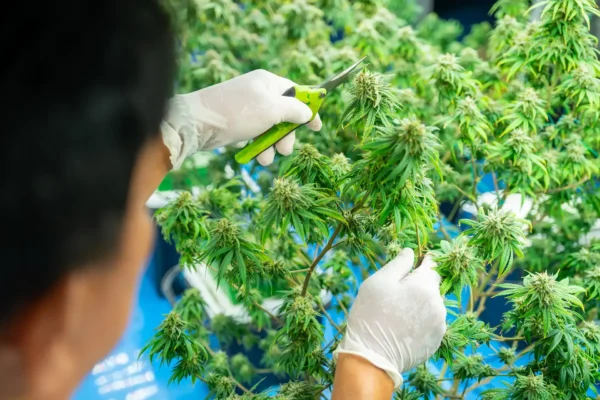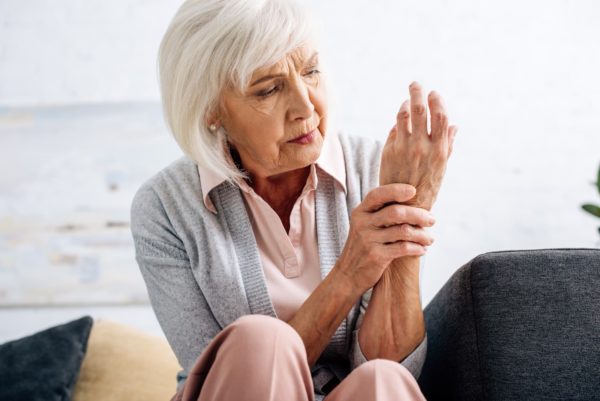

Older adults are the fastest-growing group of cannabis consumers in the United States. Many are turning to cannabis for help with age-related symptoms such as poor sleep, persistent pain and low mood. In the UK, where medical cannabis is available only on specialist prescription, interest from this age group is rising too.
A recent qualitative study in JAMA Network Open (May 2026) asked what motivates adults aged 60 and over to try edible cannabis. The researchers also explored how older adults weigh up different cannabinoid profiles. The findings offer a useful window into patient decision-making — though the study was carried out in a US state with recreational legalisation, so the context is not the same as the UK.
What are Cannabis Edibles?
Cannabis edibles are products containing cannabinoids, most commonly delta-9 tetrahydrocannabinol (THC) and cannabidiol (CBD), that are consumed orally. They are commonplace in many markets where adult use of cannabis without a prescription is legal, such as the US.
Little research has explored older consumers’ perceptions of these products or different cannabinoid profiles. Moreover, edible products present distinct qualities, such as delayed onset, dosing uncertainties, and potential medicine interactions, that may have specific effects on this population.
Given the rising popularity of edible cannabis among older adults, it is important to understand what influences consumers’decision-making around these products.
What is medical cannabis in the UK?
In the UK, cannabis-based products for medicinal use (CBPMs) are unlicensed medicines. Only a specialist doctor on the GMC Specialist Register can start them, and only when licensed treatments have not worked or are unsuitable. Most UK patients receive an oil or dried flower for vaporisation. Some eligible patients may be prescribed pastilles if suitable. Pastilles in the UK are manufactured according to Good Manufacturing Practice and contain fixed doses of major cannabinoids.
This distinction matters. The products studied in the US are not the same as those available to UK patients, and recreational use is not the same as supervised medical use
What did the researchers look at?
The study, led by researchers at the University of Utah, recruited 169 adults aged 60 or older from Colorado between November 2021 and November 2023. To be eligible, participants had to use cannabis no more than seven times a month and be interested in trying it for one or more of:
Each participant completed a demographic survey and a short semi-structured interview. The interview covered their interest in cannabis and their views on three product types: THC-dominant, CBD-dominant, and combination edibles. They were then asked which type they intended to buy from a local dispensary.
The mean age was 70.8 years and 54% identified as female. Just under half (49%) had used cannabis before, on average about once a week.
Which products did older adults choose?
When asked about their reasons for interest, 57% wanted to try cannabis for sleep, 50% for pain and 25% for mental health. When asked which product they planned to buy:
- Combination THC & CBD: 57.5% (n = 96)
- CBD-dominant: 28.7% (n = 48)
- THC-dominant: 13.8% (n = 23)
Combination products were the clear preference.
Why are older adults exploring cannabis?
The interviews identified six recurring motivations:
- Seeking alternatives to pharmaceutical medicines (54 participants) — worry about side effects, long-term risks or dependence.
- Exhausted other options (46 participants) — tried multiple approaches without satisfactory results.
- New or worsening age-related symptoms (40 participants) — looking for help with sleep, pain or mood changes.
- Influence of evidence or social claims (36 participants) — heard about possible benefits through friends, family, the media or talks.
- Social or recreational interest (12 participants) — curiosity about the experience itself.
- Substance substitution (11 participants) — interest in replacing alcohol or other substances.
Most participants were looking for symptom relief, not recreation. Many had tried several other approaches first.
How did older adults view different cannabis products?
Perceptions varied substantially by product type.
THC-dominant products
Perceived outcomes focused on psychoactive effects (66 participants), which some felt could affect relaxation and mood. Anecdotal accounts from others were also influential (60 participants). A smaller group (7 participants) saw THC products as an alternative to alcohol.
Concerns were more prominent than benefits. Six drawback themes emerged, focused on impairment and unwanted effects:
- Functional impairment (60 participants)
- Unwanted psychoactive effects (55 participants)
- Adverse effects (31 participants)
- Increased risk of dependency (23 participants)
- Cognitive harm (20 participants)
- Reduced energy or motivation (15 participants)
CBD-dominant products
CBD was most often linked to anecdotal reports of effects (114 participants) and to the appeal of avoiding impairment (22 participants).
The biggest concern was uncertainty about whether CBD actually works (71 participants). This is notable given how often non-pharmaceutical CBD is marketed for therapeutic benefits. Cost (16 participants) and the lack of psychoactive effects (10 participants, who viewed this as a drawback) were also raised.
Combination THC & CBD products
Combination products were seen as offering complementary effects (70 participants) and dose flexibility (12 participants). Drawbacks included difficulty tailoring the ratios (19), unwanted psychoactive effects (25), uncertainty about efficacy (14) and concerns about impairment (10).
What does this mean for older patients and clinicians in the UK?
Three points stand out.
First, older adults are making decisions about cannabis with limited support from healthcare professionals. UK patients, meanwhile, access medical cannabis through specialist clinics and pharmacies, with formulations and dosing supervised by a prescriber. Many participants in the study relied on advertising, media and word of mouth. Whilst several UK bodies have called for more clinician education on medical cannabis, the utilisation of medical cannabis in the UK is far removed from the practicalities in the United States.
Second, the study captures perceptions and intentions, not outcomes. It does not show that cannabis improves sleep, pain or mental health. Robust evidence in older adults is still limited. Where it exists, effect sizes are generally modest. Any decision about medical cannabis should be made with a specialist. They can weigh potential benefits against the risks of falls, drug interactions and cognitive effects. All of these matter more with age.
Find out more
If you would like to understand whether you may be eligible for an assessment at Curaleaf Clinic, you can complete our online eligibility check. A specialist clinician will review your information and contact you to discuss next steps.