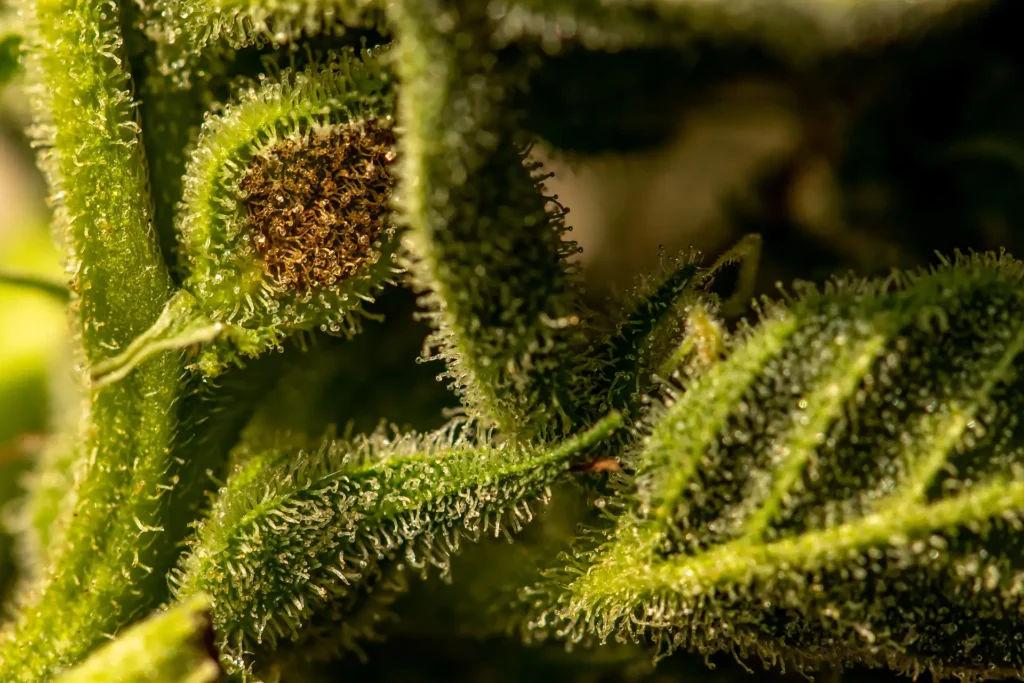
Phytocannabinoids are natural compounds found in the cannabis plant. They interact with the body’s own endocannabinoid system, which helps regulate functions such as mood, sleep, appetite, and pain. Well-known phytocannabinoids include tetrahydrocannabinol (THC) and cannabidiol (CBD).
Phytocannabinoids belong to a broader group of compounds called cannabinoids. The term cannabinoid refers to any compound made by plants, the body, or in a lab that can act on cannabinoid receptors. The prefix ‘phyto-’ comes from the Greek word phytón, meaning ‘plant’, indicating that the cannabinoids are derived from plant material.
Phytocannabinoids can affect everyone differently, depending on the type of compound, how much is taken, and personal factors like biology or past use.
Yes. Tetrahydrocannabinol (THC) is one of the most well-known phytocannabinoids that can be naturally found in the cannabis plant. It interacts primarily with the brain’s CB1 receptors, influencing mood, memory, and coordination.
No, cannabidiol (CBD) is just one type of phytocannabinoid. While THC and CBD are the most well-known and studied, many other phytocannabinoids, such as cannabigerol (CBG) and cannabinol (CBN), also exist. There are believed to be over 144 phytocannabinoids present in the cannabis plant. Each interacts with the body in different ways.
Only some phytocannabinoids, such as THC or CBN, have the potential to cause a ‘high’ or euphoria. In the context of medical cannabis, this is not a desired outcome of treatment. Instead, for eligible patients, the dose of the medications is started low and increased slowly to reduce the likelihood of any unwanted adverse events.